Chalé Spirulina

That’s how Ruben and Floris, the two founders of Chalé Spirulina, describe the early days of building their spirulina farm in Ghana. Chalé Spirulina is a Ghana-based business with a mission to fight malnutrition, create dignified jobs, and prove that sustainable food production can thrive in West Africa.
This ambitious project caught the attention of Mudita Cooperative, a Dutch social impact fund, and became the first venture to receive its support. The relationship is one of shared values: long-term thinking, trust, and impact that starts with people.
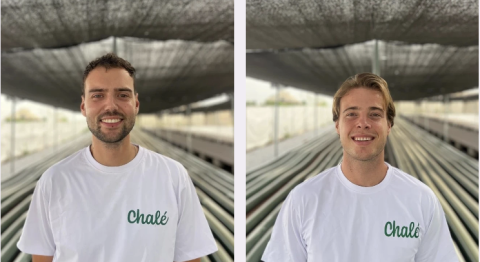
Ruben and Floris are both 26, Dutch, and driven by a desire to build something useful. Ruben’s background is in global business and sustainability. He worked with social enterprises and spent time in Ghana during his time at The Good Roll, where he supported local production. Floris has a background in business administration and economics, and started his own sustainable gifting company while still in university. After selling that company in 2023, he decided to fully commit to Chalé Spirulina.
“Spirulina is one of the most efficient and sustainable food sources we know,” says Floris. It’s a fast-growing microalgae packed with protein, vitamins, and minerals. It requires little water and space, and can be grown in places where conventional agriculture struggles.
“It fits the future,” Ruben adds. “But we also saw how it could address issues that are urgent right now in Ghana, like malnutrition and youth unemployment.”
Their idea was to grow spirulina locally, in a sustainable and socially responsible way, and create a high-quality product for both the Ghanaian and European markets. The added challenge: do it from scratch, in a rural area, with a local team. That ambition aligned perfectly with Mudita Cooperative’s mission and sparked the beginning of a close partnership.

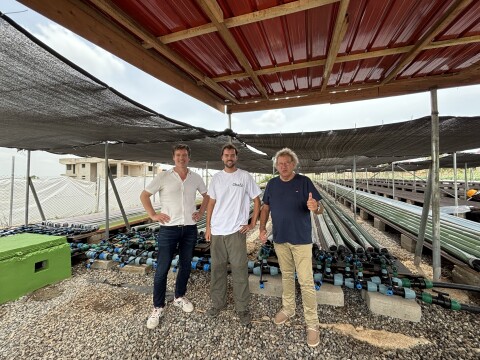
While the pilot was still underway, Floris connected with Jeroen, co-founder of Mudita Cooperative. “A friend of my sister told me to check them out. I sent our pitch deck, and a few weeks later I was having a beer with Jeroen in Amsterdam,” says Floris.
That first conversation turned into something more. Jeroen flew to Ghana to visit the site, meet the team, and understand the project. Soon after, Mudita became Chalé Spirulina’s first investor.
“The funding helped us finish construction, pay fair wages, and take the leap from pilot to production,” Floris says. “We have a very transparent relationship with Mudita, meaning that we openly discuss our challenges, budget and future plans. Instead of only asking questions, Mudita actually thinks along with us. Given the experience of Wim, Jeroen and the potential portfolio companies, this helps us to improve our strategy and solve certain problems.”
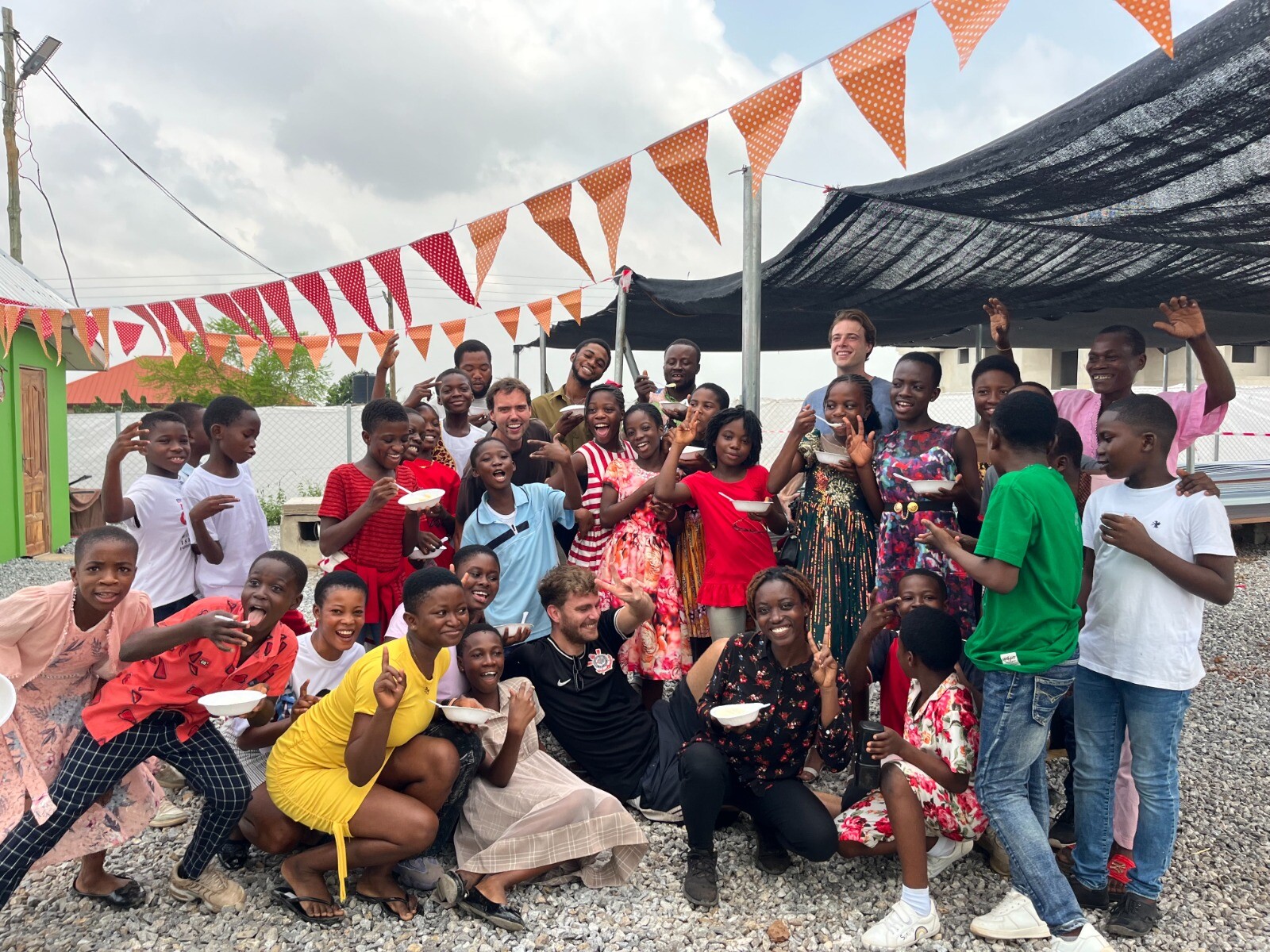
Over the past year, Ruben and Floris have faced many challenges. They developed a 2,500 m² plot of land completely overgrown with vegetation. Without a contractor, and using only local craftsmanship and materials, they built their spirulina farm and processing facility from the ground up. It was hard, slow, and sometimes unpredictable work. But it created something real: a functioning spirulina farm, built with and for the community.
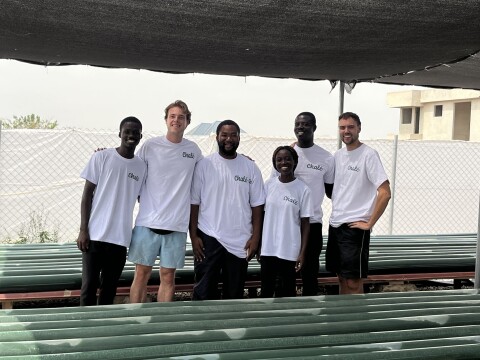
One of the most important relationships they built early on was with KITA (Kumasi Institute of Tropical Agriculture). Several of their employees came through KITA, started as interns, and grew into full-time team members. "It was amazing to see how they developed in their roles," says Ruben. "There's a real sense of pride and ownership."
As Ruben puts it: "There is a sense of community feeling in Ghana that you will not find in The Netherlands. Everybody is looking out for each other and people truly care." He shares the story of Emmanuel, one of their first employees, who called him just to let him know that some freshly harvested oyster mushrooms were waiting at the farm. A gesture of kindness that reflects the kind of trust and connection that drives their work. "Running a business in Ghana is definitely not easy, but these small things are a reminder of why we’re doing it. Because of the people."
Floris adds: "When you start an impact-driven business, your mission is still something abstract. But when you see the smiles during a birthday celebration with your team, that’s when it becomes real. That’s when you feel what impact truly means. Being a good employer, supporting people to grow, creating something bigger than just numbers — that’s where the value lies."


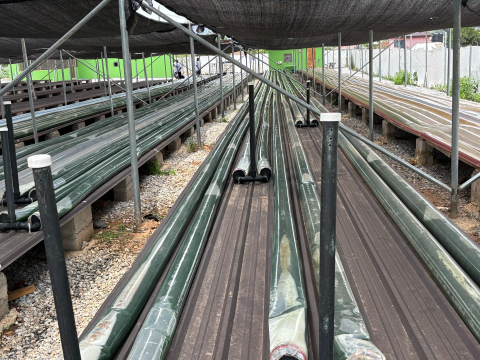
The journey hasn’t been without challenges. Early on, their first structure collapsed during a storm, forcing them to rethink and rebuilt from the ground up. To come to a stronger solution, they used local materials and skills. Friends with engineering backgrounds stepped in, and support from local partners in this process proved crucial. It was a continuous cycle of trial, error, and adjustment.
They also faced the complexity of navigating different cultural expectations, working styles, and communication habits. “We had to learn how to lead a team in a way that fits both who we are and where we are,” says Ruben. “And we’re still learning.”
Chalé Spirulina is working towards full functioning facility, which will result in the capacity to produce up to 500 kg of dried spirulina per month. They’ve created local jobs, built a stable supply chain, and are preparing for their first exports to Europe.
At the same time, they’re setting up a school feeding program in Ghana. Ten percent of their spirulina will be donated to schools to help fight child malnutrition. “We want the impact to be direct and local, not just part of a marketing story,” says Floris.
Right now, they have a team of four full-time employees, with four interns set to join this summer. It’s a big step towards creating local employment in their community “Apromase”, about five hours away from the capital Accra.
The current facility is just the beginning. Now that the first production cycles are underway, the team is working towards full capacity at approximately 500 kg of dried spirulina per month. Once that’s achieved, the plan is to build a new facility with a capacity of 2,500 kg per month, with room to scale up to 5,000 kg. These amounts can provide essential nutrients to thousands of school meals each month. "If we can reach that point," Floris says, "we’ll be able to make a serious impact in Ghana. We are only getting started."
This story reflects the kind of investing Mudita Cooperative stands for: long-term partnerships, a people-centered approach, and a focus on creating lasting value rather than just chasing short-term returns. Mudita commits to projects rooted in trust, not urgency.
By backing early-stage entrepreneurs like Ruben and Floris, Mudita helps unlock potential that often gets overlooked. It’s not about quick wins. It’s about steady growth, shared learning, and regenerative value.
Mudita is opening up space for new co-investors: people who believe that capital can be kind, and that good businesses take time.